Our Location
5th Floor, Huake Center, Lanshan District, Linyi City, Shandong Province, China

5th Floor, Huake Center, Lanshan District, Linyi City, Shandong Province, China
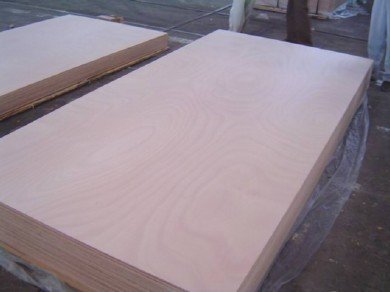
Searching for n ply plywood usually means one question: how many veneer layers should this panel carry? The ply count decides stiffness, screw grip, and dimensional stability, yet no single number fits every job. This guide explains what adding plies actually changes, how many plies common grades use, and how to read the edge to confirm the count before the sheet leaves the yard.
Buyers who order by thickness alone miss the structure under the face, because the same 18mm panel can flex or stand rigid depending on how the core is built.
Each ply is one veneer layer glued to the ones beside it, and the count tells you how many of those layers run across the thickness. A sheet with more plies uses thinner veneers, which cuts the risk each layer carries a natural defect such as a loose knot or a hidden void.
The count changes behaviour more than it changes appearance. Stiffness rises as the veneers get thinner and more numerous, screw grip improves because the screw bites into more glue lines, and the board resists warping because opposing plies balance each neutral strip.
Consequently, two panels of the same thickness can behave very differently. An 18mm board built from nine thin plies deflects less under a heavy shelf load than a five-ply panel of the same nominal size, so the count belongs in the spec, not just on the mill label.
In short, the count is the cheapest structural upgrade a panel can carry, because it costs the mill little and changes what the buyer can safely do with the sheet.
The count also interacts with the bond class. A sheet pressed with a weaker urea glue fails in damp air no matter how many plies it carries, while the same plies inside a phenolic-bonded panel survive a wet site. Read the quantity and the glue line as one decision rather than two independent facts.
Standard commercial panels concentrate in a narrow band of counts. Thin decorative boards and door skins run three or five plies, mid-range furniture boards carry five to nine, and structural or formwork panels climb to thirteen, seventeen, or more plies at heavy thicknesses.
The table below maps typical counts to thickness bands. Treat the numbers as starting points, because veneer thickness varies by species and mill, yet the pattern holds across most suppliers.
| Nominal thickness | Common ply counts | Typical use |
|---|---|---|
| 3-6 mm | 3 or 5 plies | Door skins, drawer bottoms, light panels |
| 9-12 mm | 5 or 7 plies | Shelving, carcasses, partitions |
| 15-18 mm | 7 to 9 plies | Worktops, bench tops, load-bearing panels |
| 25 mm and up | 13 to 21 plies | Formwork, structural boards, heavy applications |
As a result, a buyer asking for 18mm plywood without a count leaves the supplier free to deliver the lightest core that still measures 18mm at the caliper. The count closes that gap.
Additionally, overseas naming conventions print the count sometimes, but often a label carries only thickness and bond class. When the count is missing, the edge rather than the print settles the question.
Different mills also set the count by the press and the veneer source. Plantation-grown hardwood yields thin, uniform veneers that let a mill pack more plies, while a mixed timber supply produces thicker, uneven layers that force a lower count at the same thickness. The floor thickness, therefore, tells only half the story about the structure you actually get.
More plies earn their keep where deflection, screw pull-out, or dimensional stability matter. Formwork panels, heavy shelving, workshop benches, and cabinetry with long unsupported spans all benefit from a thicker count in the core.
In contrast, a furniture panel that stays dry and lightly loaded performs perfectly at five or seven plies. Paying for seventeen plies in a closet carcass adds stiffness nobody feels and raises the price for no practical gain.
Count alone does not guarantee quality, because veneer thickness defines the total. A nine-ply sheet built from thick poplar veneers can weigh more than a thirteen-ply panel built from thin birch veneers, yet the thirteen-ply panel usually handles concentrated loads better.
The two numbers belong together in the spec: the count tells you how many layers, and the veneer thickness tells you how much wood each layer represents. A supplier that gives you both lets you compare quotes fairly.
Finally, builder-grade sheets sometimes pad the count with thin, low-density core veneers. Count the plies and weigh the sheet, because a padded core adds layers without adding the stiffness you pay for.
Consider a 25mm formwork panel in a real pour. A seventeen-ply board spreads each load step across more glue lines close to the face, so it resists the repeated deflection of pouring cycles better than a seven-ply board of the same size standing on the same wall. The extra layers earn their keep where the mould takes a beating.
The edge is the honest face of plywood. You can read the count in seconds without cutting the panel, and a few checks confirm the build before the stack gets unloaded.
Furthermore, count the plies on several sheets, not the one on top. A uniform count across the stack signals a controlled line, while a mixed stack tells you the lot came from different runs or different mills.
Take a brass scale to the dock. A standard steel rule bends on the edge, while a rigid scale presses flat against the veneers and makes the count exact.
Match what you count against the supplier’s written spec as well. When the quote says seven plies and a sheet on the stack reads nine, the difference may point to another production line, so record the reading and reconcile it with the packing list before the lot clears the yard.
Does more plies always mean stronger plywood? Not by itself. Strength follows from veneer thickness, species, glue bond, and even construction together; count is one input among several.
Does plywood need an odd number of plies? Most structural panels use odd counts so the core stays balanced, although some mills produce even counts with a perfectly balanced layout. Ask the supplier which layout the sheet uses.
Does the count change the price per sheet? Usually. More veneers mean more glue lines and more press time, so higher counts sell at a small premium over lighter cores of the same thickness.
Can a do-it-yourselfer order a specific ply count? Yes, from suppliers who buy direct from the mill. Retail stacks tend to feature one count per thickness, so work with a source that can list the count on the quote.
Does a higher count make the sheet heavier to transport? It can. More plies usually add density, so a seventeen-ply 25mm board weighs noticeably more than a seven-ply 25mm board, which matters for pallet planning.
Does the ply count change how a sheet takes a finish? Only indirectly. A tight, dense core sands evenly and holds a film without telegraphing, while a padded core can show through after sanding, so the final finish follows the core as much as the surface grade.
For project quantities, put the count in writing next to the thickness and bond class. A clean spec reads 18mm, seven or more plies, phenol-glued, and the supplier’s written confirmation protects both sides when a load arrives short of expectations.
Compare the count offer against what the job actually carries. A heavy workbench deserves a thick-core sheet, while a light ceiling panel does not, so set the count by the load rather than by habit.
Ask for a packed count sample when you open a relationship with a new mill. A single square of the exact panel ends later arguments about what the order specified, and the sample gives the cutting team a physical reference at the table.
The same discipline applies across product lines. A Commercial Plywood range lists counts and veneers on the spec sheet, and smooth-faced interior panels such as Melamine Plywood carry a defined core behind the coating.
For wet-cast formwork and structural exposure, Film Faced Plywood pairs a tight ply count with a coated surface that protects the edges between pours.
A documented panel range such as the one HYY supplies lists the ply count, thickness, and glue class together, so the quote answers the n ply plywood question before the order ships.
Name the count, confirm it at the dock, and the sheet earns its place in the build.