Our Location
5th Floor, Huake Center, Lanshan District, Linyi City, Shandong Province, China

5th Floor, Huake Center, Lanshan District, Linyi City, Shandong Province, China
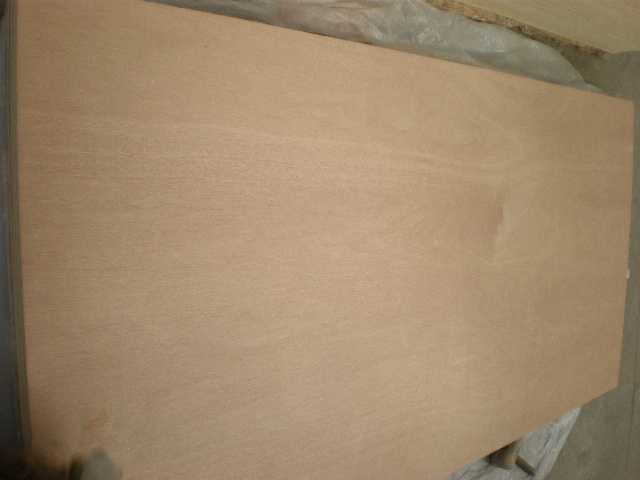
A stack labeled n star plywood carries a brand name, but the name alone does not prove the grade. The label answers a real question in the Indian market, where buyers pay a premium for recognized brands and relabeled generic boards try to claim that premium. This guide walks through the checks that separate a genuine branded sheet from a renamed panel.
Every check here runs in under two minutes at the yard, and together they settle the grade, the bond, and the weight before your money changes hands.
A brand name tells you which mill line the sheet claims to come from and usually implies a consistent manufacturing standard. It does not tell you the thickness, the glue class, or the face grade, because those change from product to product inside the same brand family.
Consequently, a buyer who trusts the name and skips the stamp buys the brand’s reputation on faith. The reputable mills support that faith with printed marks and paperwork, so a genuine sheet wears its details where you can read them.
In contrast, a relabeled board often shows a clean face with weak documentation. The mill mark, the batch code, and the test reference tell the difference between a branded product and a dressed-up generic sheet.
Finally, write down the exact brand and variant from the label before you compare quotes, because two sheets that share a brand name can still differ in bond class and price.
Brand identity questions also travel across borders. An importer who receives panels quoting a foreign mill should confirm that the brand is authorized in the exporting country, because parallel exports and grey-market goods arrive without the mill’s recall and support channel.
The bond class decides where the sheet can serve, and it outweighs the brand name in most purchasing decisions. Moisture Resistant (MR) boards suit dry interiors, Boiling Water Resistant (BWR) boards handle kitchens and bathrooms, and Boiling Water Proof (BWP) boards cover outdoor and high-humidity work.
The stamp line on a branded panel lists the class in plain letters, usually MR, BWR, or BWP. If the print stops at the brand name and never mentions a class, treat the sheet as an ungraded board until the seller explains it in writing.
Furthermore, price alone does not reveal the class. A heavily discounted branded BWR sheet deserves the same boil test as a no-name board, because the class lives in the glue, not in the marketing.
Boiling a pencil-thick sample in plain water for a few minutes shows the truth: a genuine BWP panel holds its layers, while a downgraded sheet opens at the glue line and tells you exactly what you bought.
Run the boil test on a sample from the middle of the stack, not the display sheet. The display sheet has often been handled, dried, and selected for looks, while a middle sheet shows the true state of the lot and gives the verdict a contractor can trust.
Remember that the bond class and the face grade print as separate facts. A BWP sheet can still carry a patched, industrial face, so ask for a face code that matches the intended finish rather than assuming the class guarantees the surface.
Branded panels still flex, warp, and delaminate when the core is poor. The face grade describes the surface quality, the edge shows the veneer build, and the weight evidences the core density, so these three readings complete the inspection.
Run a hand across the face for patches, repair strips, and open knots. A genuine premium face presents a clean, even grain with minimal patching, while a downgraded sheet shows repair work the brand would not ship.
As a result, a thin-edged branded sheet fails the grade even when the label reads perfectly. Core veneers that stop short of the face cut screw grip and make the edge crumble under the router, so measure the corner rather than trust the nominal number.
The core of a branded board deserves a knuckle test. Tap the face and listen for hollow areas, because a void pocket kills screw grip and lets a router tear the edge, while a genuine panel presents a solid, even thud across most of its surface.
Check the brand print itself for consistency too. Oil-based stamps that wipe away with a damp cloth, or letters that blur between sheets, point to a rushed line, whereas a firm, uniform impression supports a controlled production run.
Weight ranks among the simplest fraud filters in the plywood market. A genuine branded board carries a dense, glue-filled core, while a relabeled sheet often sheds weight through cheap, light veneers and open glue lines.
Weigh one sheet on a truck scale or a bathroom scale and compare it against the mill’s stated weight for that size and thickness. The difference tells you about core density faster than any inspection of the face.
Moreover, weigh an entire stack, not just the top sheet. A consistent weight across the lot signals a controlled production run, while a spread of several kilos between sheets points to mixed sources hiding behind one label.
Record the weights on the delivery note. That log makes a later quality claim easy to prove and gives the next delivery a baseline to compare against.
Write the measured weights next to the brand and batch on the receipt. When a second delivery arrives lighter than the first, the log catches the change while the panels still sit on the truck and the claim stays easy to prove.
Is n star plywood available in all thicknesses? Most branded lines follow the market range from thin decorative boards to heavy structural panels, and the local distributor guides availability by thickness and region.
Does a brand stamp guarantee the sheet is waterproof? No. Water resistance follows the bond class, so a branded MR board fails the boil test just like any other MR panel. Ask for BWP if the sheet faces water.
Can a retailer cut costs by selling close-branded boards? Only when the buyer skips the stamp check. Comparing the printed class, the batch number, and the paperwork tells a genuine sheet from a similar-looking panel.
Should you buy a branded sheet without a test certificate? Only for small, dry, non-structural jobs. For project quantities, request the mill test certificate and keep a physical sample from the first box.
How do you tell a genuine branded sheet from a lookalike? Compare the stamp, the batch code, and the paperwork together, because any one detail can be copied while three matching details across two sheets are hard to fake.
Does the brand affect resale value in a documented project? Usually yes. A named sheet with matching certificates simplifies the handover paperwork, and a specification line that reads brand X or equivalent is easier for a second party to price.
For volume orders, protect the purchase with paper. Ask the supplier to state the brand, the variant, the bond class, the thickness, and the standard reference on the invoice, and keep one cut sample from the first delivery for comparison.
Request the mill test certificate before a pallet leaves the yard. The certificate names the standard, the bond class, and the tested properties, so the brand claim travels with documented support instead of a painted logo.
Keep the inspection results in a simple monthly log. The brands that pass twice in a row earn a standing order, while a sheet that fails a boil test once drops off the list without a long argument.
The same checklist applies across product ranges. A Commercial Plywood spec sheet lists grade and bond together, and furniture interiors that need a smooth, ready surface compare reasonably against Melamine Plywood.
For panels that face moisture in kitchens and bathrooms, a phenolic-class product such as Film Faced Plywood offers a coated working surface that simplifies the spec.
A documented range such as the one HYY supplies names the standard, the bond, and the core on the delivery paperwork, so the n star plywood question resolves before the pallet leaves the dock.
Check the label, weigh the stack, and keep the paperwork, and the branded sheet proves itself.