Our Location
5th Floor, Huake Center, Lanshan District, Linyi City, Shandong Province, China

5th Floor, Huake Center, Lanshan District, Linyi City, Shandong Province, China
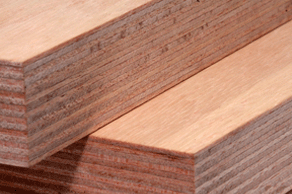
Plywood how much GST is a tax question wrapped in a price question, and the answer shifts with the grade, the market, and the rule that governs the sale. The tax sits on top of the panel price, and a buyer who reads it on the invoice pays the right figure. This guide explains how the tax enters a panel order and how to keep it clear from quote to delivery.
A buyer who asks plywood how much GST wants to know the tax on a panel order, not the panel price itself. The two figures belong together on the invoice, and a buyer who separates them sees the real cost of the order at a glance. The tax rate depends on the market and the grade, so the answer starts with the rule that applies.
A clean invoice shows a few key lines:
The tax code, often called the tariff or the goods code, ties the panel to a rate band. A buyer who checks the code and the rate on the invoice confirms that the supplier applied the right rule, because a wrong code can raise or lower the tax on the same panel.
Consequently, the GST figure follows the grade and the market, not a single national number. A buyer who treats the rate as fixed before the order risks a surprise at the counter, so confirm the rate with the supplier and the local rule before the money moves.
A buyer also keeps the tax apart from the panel price when the budget is set. The panel carries the value the build uses, and the tax is a pass-through that a credit rule may return later. Keeping the two lines separate shows the true cost of the goods and the recoverable part side by side.
The tax enters the price after the mill and the freight, and it grows from the panel value the supplier records. A higher panel value carries a higher tax amount at the same rate, so a buyer who trims the panel price also trims the tax that sits on top of it.
| Layer | What it adds |
|---|---|
| Panel price | The base value before tax |
| Freight and charges | Extra value in some rules |
| Tax rate | The share the rule applies |
| Total | The figure the buyer pays |
Furthermore, the tax can apply to the freight and the handling in some markets, which lifts the base the trade charges. A buyer who reads the invoice sees whether the freight sits inside or outside the taxable base, and that detail changes the total by a small but real amount.
In contrast, a buyer who buys for resale may claim the tax back under a credit rule. The panel leaves the shop without a lasting tax cost, and the buyer who keeps the invoice can recover the amount. That credit makes the paper trail as valuable as the panel itself.
As a result, plan the price with the tax in view. A buyer who adds the tax before the budget keeps the order on plan, while a buyer who ignores it finds a gap between the quote and the final bill.
The tax rate moves with the grade, the use, and the market, so two panels can carry two rates in the same city. A finished board for furniture and a plain panel for structure often sit in different bands, and the buyer who knows the band orders with the tax in mind.
A few factors shift the rate:
Next, the market matters as much as the panel. One country may tax a panel as a wood product and another as a finished good, and the rate follows the local rule rather than the sheet itself. A buyer who ships across a border reads both rules before the order.
However, a rate that holds today can change with a budget or a policy shift, which is why a buyer confirms the figure at each order rather than storing one number. A stored rate from last year can mislead the budget, while a fresh check keeps the order accurate.
Therefore, treat the rate as a moving part. A buyer who confirms the rate and the code on each order avoids a surprise and keeps the total on plan, and the habit costs only a short call or a line in the quote.
A clear invoice separates the panel price from the tax and names the rate and the code that apply. A buyer who reads all three lines confirms the trade and holds the proof for any later credit. A vague invoice that folds the tax into one total hides the rate and the code.
Check the invoice against a short list:
In contrast, a buyer who files the invoice keeps the credit option open. A supplier who names the tax code on the paper gives the buyer the record the tax office wants, and the buyer who stores it recovers the tax without a chase.
Furthermore, match the invoice to the order. A gauge or a grade that shifted from the quote can change the rate band, so the buyer who lines up the invoice with the purchase order spots a mismatch before the payment clears. That check protects the budget from a quiet tax rise.
Finally, ask the supplier to state the rate on the quote before the order. A supplier who names the rate and the code in writing earns trust, and the buyer who holds that paper avoids the argument that follows a surprise on the final bill.
A buyer who plans the tax with the panel keeps the total on target, and the plan starts with the grade and the rate. A clear spec, a firm quote, and a clean invoice turn a confusing tax into a simple line on the budget.
For general construction and a workhorse panel, Commercial Plywood gives a steady sheet at a fair value. For a forming job that needs a tough, water-resistant face, Film Faced Plywood takes the reuse and the water of a slab. For a smooth, sealed interior part, MDF Board offers a flat face at a fair figure.
Furthermore, group the order to spread the freight and the handling, which trims both the base and the tax that sits on top. A buyer who combines several gauges into one buy pays less per panel and keeps the tax base lower across the whole order.
A supplier such as HYY states the price and the tax on one clear line, so the buyer sees the full cost before the order. That clarity keeps the budget true and the paper trail clean for any credit the buyer claims later.
Store the rate and the code with the order file. A buyer who keeps the invoice and the code on record handles the credit claim and the next order in minutes, and the record shows any change in the rate over time. That file turns a tax question into a routine line, and it keeps the budget honest across the season.
The questions below come up on the tax line, and each has a short answer.
The rate depends on the grade, the market, and the tax code for the sale. Confirm the figure with the supplier and the local rule before the order.
No. A finished board and a plain structural panel can sit in different bands, so the rate follows the goods code.
In some markets the freight sits inside the taxable base. Check the invoice to see how the supplier applied it.
If you buy for resale under a credit rule, you can often recover the tax on a valid tax invoice that names the rate and the code.
The panel price, the rate, the tax code, the freight, and the total with the tax broken out on its own line.
A buyer who names the rate, the code, and the basis on the quote avoids the surprise on the final bill. That clarity turns a confusing tax into a plain figure the budget can hold.