Our Location
5th Floor, Huake Center, Lanshan District, Linyi City, Shandong Province, China

5th Floor, Huake Center, Lanshan District, Linyi City, Shandong Province, China
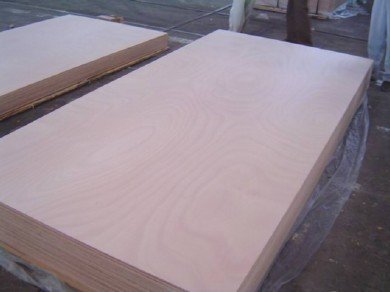
Buyers who search for plywood b&q 18mm usually need the one sheet that carries a real load: bench tops, strong shelves, and form panels. The 18mm panel sits at the heavy end of the retail range, weighs the most, and costs the most per sheet. It earns that price only where the frame really loads the panel. This guide covers where 18mm belongs, how to check it at the dock, and when a direct order makes the heavy gauge affordable.
An 18mm softwood plywood sheet resists bending that defeats thinner panels, so builders reserve it for parts that carry people, tools, or wet concrete. Workbench tops take repeated hammer blows, heavy shelving spans wider open bays, and small form faces hold a fresh pour. Load path describes the route a weight travels from the surface to the frame, and a thick panel spreads that weight over a wider footprint.
The gauge also saves framing time. A thick sheet bridges a wider span without extra joists, so the buyer trades a heavier panel for a simpler frame.
However, 18mm carries a weight cost that surprises first-time buyers. A standard 8 by 4 ft sheet weighs roughly 13 to 14kg, which crosses the single-person comfort line for many crews.
In effect, the 18mm sheet answers a structural question rather than a decorative one. Buyers who need a flat, strong work surface reach for it first, and buyers who panel a wall rarely need it.
The trade shows up in the schedule. A crew that orders 18mm plans two hands for every lift and a cart for the run to the bench, while a lighter sheet moves alone. The time per sheet matters on a fit-out, so buyers weigh it against the span the panel covers. The heavy gauge pays back when it removes framing work, and it costs time on every job where it does not.
The heavy gauge punishes careless handling more than thinner sheets do. A dropped 18mm panel can chip a corner and loosen a face veneer before the first cut. Crews lift on the flat, carry the sheet on edge, and keep two hands under the middle.
At the dock or the shelf, a short dimensional check catches most problems early.
Furthermore, the printed gauge varies between tiers. A structural panel and a budget panel can both read 18mm, yet the core and the bond differ. Buyers who need the sheet to hold a load verify the stamp, not just the sticker.
Rejection rules protect the order. A panel that fails the thickness tolerance or shows a split edge goes back before it reaches the frame, because the heavy gauge costs more to redo on site.
Delivery adds a second inspection point. A panel that arrives leaning against a wall or resting on a narrow bearer cups along the free edge. Buyers who unload flat onto full bearers and cover the top of the stack avoid that damage. The habit takes a minute on the dock and saves a panel that would otherwise fail the flat test at the bench.
Across the store, the 18mm plywood competes with several boards that look similar from a distance. Each one differs in weight, moisture behavior, and surface.
| Board | Best use | Watch out |
|---|---|---|
| 18mm plywood | Strong frames, jigs, benches | Weight per sheet |
| Film faced plywood | Concrete form work | Edge sealing |
| MDF board | Smooth painted panels | Moisture at the edges |
| Chip board | Cheap shelves and pack frames | Weak across a span |
The decision ladder stays simple. Choose plywood when the part carries a load, choose film faced when the face touches wet concrete, choose MDF when a paint finish rules, and choose chip board when cost matters more than strength.
For form work that faces fresh concrete, Film Faced Plywood carries the smooth, sealed surface that releases the pour cleanly. For strong frames and benches, Commercial Plywood supplies the stiff core at a competitive rate. For hidden pack frames and crates, Chip Board keeps the cost in check.
The ladder answers a budget question as well. Plywood prices higher than chip board, yet it holds screws, takes a hinge, and survives a re-cut. Buyers who need a panel that outlasts the crate buy plywood, while buyers who need one trip to the site buy chip board. The third option, a painted MDF face, costs less again when the surface only needs to look right.
The plywood b&q 18mm price per sheet includes the retail layer, and since the panel costs the most in the range, that layer becomes the largest absolute gap. Volume buying collapses the gap quickly.
The heavy gauge changes the freight math. Because each sheet weighs more, a container carries fewer 18mm panels than 9mm or 12mm sheets. Buyers compensate with a mixed load: the heavy gauge in working numbers and the lighter gauges filling the remaining space.
A documented order names the thickness tolerance, the core, the bond, and the face, because the heavy panel shows every deviation. Factories such as HYY ship the specification in writing, so the buyer checks the first delivery rather than renegotiating it.
Consequently, buyers treat the 18mm order as a specification project rather than a shelf pickup. The paper work pays back in fewer rejects.
Documents also travel with the cargo. The buyer asks for a packing list that names the gauge, the core, and the batch, then checks three bundles against it on arrival. A sheet that misses the spec goes back before it reaches the frame, and the claim costs less at the dock than on the bench. Buyers who keep the list beside the order file settle the next shipment faster.
The heavy gauge arrives as the top of the bundle, and the handling rules at the yard decide how it looks at the bench. Buyers who plan the stack avoid the dents that a busy dock creates.
Stacks sit on full bearers rather than narrow rails, because an 18mm sheet supported only in the middle holds a bow that the cut never erases. The top sheet takes the sun and the rain in transit, so a cover over the load pays for itself on the first delivery.
Moisture follows the load. A covered stack stays close to its loading content, while an open stack dries unevenly and cups. Buyers ask the mill to load dry sheets and to cover the top of the container before the doors close.
Edge damage shows up as chipped veneers and loose corner strips. Corner protectors and a strap across the bundle limit the movement that causes those chips during the lift.
In practice, the routine takes a minute and prevents the claim. Buyers who handle the heavy gauge with the same care as the fine face receive a panel that cuts clean on the first pass, and the crew spends its time on the build instead of on the joint.
The questions below keep coming up in purchasing reviews, and each has a short answer.
Not for a load path. The two thin layers slip past each other at the joints, so the double panel does not match the stiffness of one 18mm core.
A standard softwood sheet of this gauge weighs roughly 13 to 14kg, so two people handle it comfortably around the bench.
Only with the right face. A plain 18mm panel releases the pour poorly, while a film faced surface survives the strip and the clean.
Uneven moisture or a hard edge stand usually causes the bow. Store the sheet flat on bearers and seal the cut edges on damp sites.
For wall panels, drawer boxes, and light shelving, the extra weight and price never pay back. The middle gauges handle those jobs.
A short trial settles it. Buyers fit one heavy sheet next to one middle sheet in the same frame, then judge the lift, the cut, and the finish. The comparison answers the question the price list cannot, and it takes an afternoon instead of a full order.