Our Location
5th Floor, Huake Center, Lanshan District, Linyi City, Shandong Province, China

5th Floor, Huake Center, Lanshan District, Linyi City, Shandong Province, China
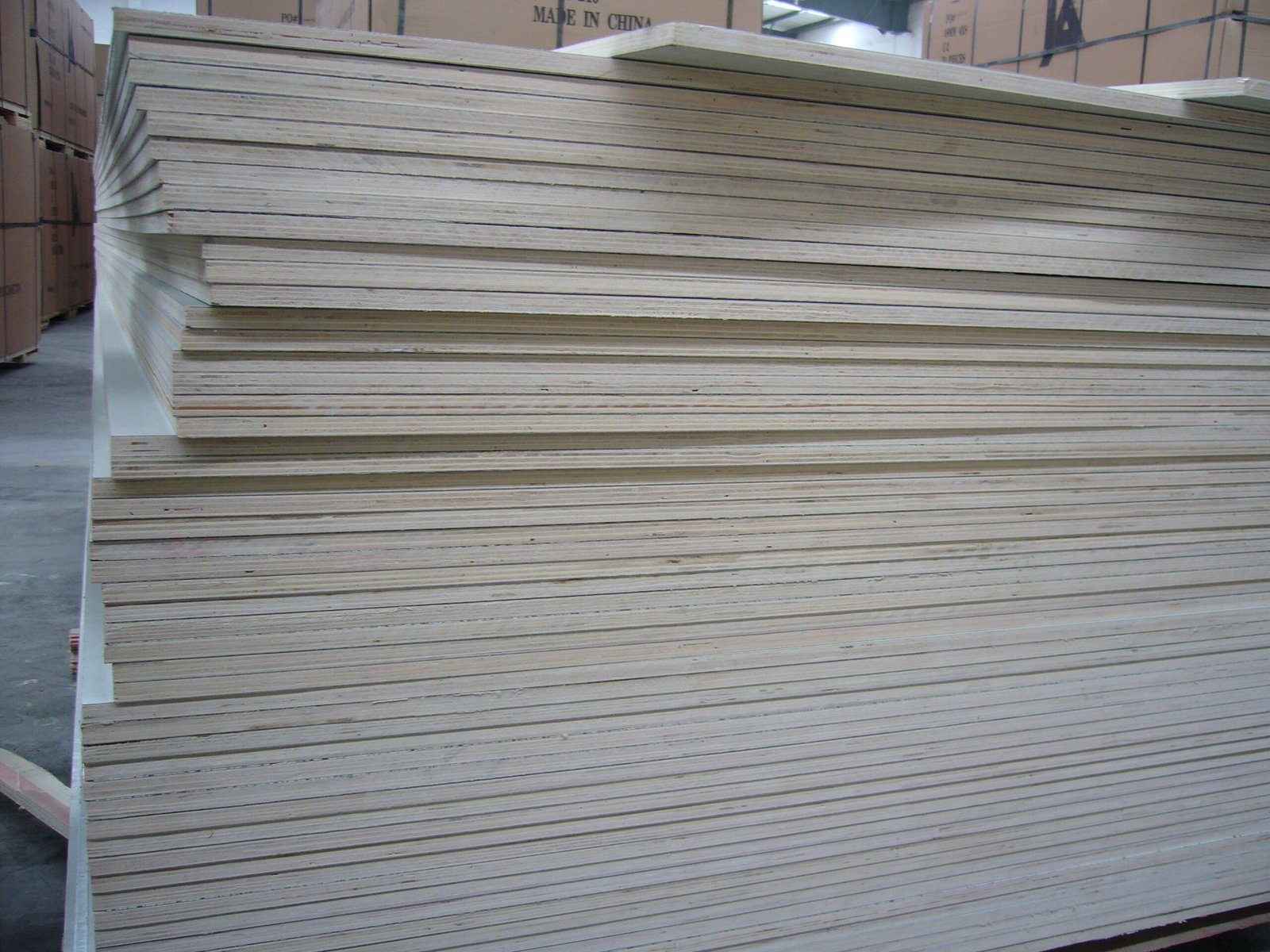
Plywood explained in plain terms starts with thin wood sheets glued in crossed layers. That crossed build is why the panel stays flat and strong where a solid board would split and twist. This guide covers how the panel is made, the grades and bonds that decide its use, and the checks a buyer runs before placing a mill order.
A plywood mill peels a log into thin veneer, the sheet a long knife slices from a spinning trunk. The line dries each sheet to a set moisture, spreads glue, and stacks the veneer in crossed layers so the grain of one sheet runs at a right angle to the next. Heat and pressure bond the stack into one panel. That cross-grain build spreads a load across the whole sheet and holds it flat, where a single solid board would cup and split under the same load.
The line moves through a fixed sequence:
Veneer names the thin sheet of wood the lathe peels from the log, and ply names the finished panel that stacks those sheets in crossed layers. The layer count sets the thickness, and an odd count keeps the grain balanced on both faces, which is why plywood resists warping better than a glued block of the same size. A tight core with no gaps lifts the bending strength.
Consequently, the build decides the strength. A panel with well-graded face veneer and a tight core resists bending better than one with voids between the layers. A buyer who asks about core quality and glue spread reads the real difference between two boards that look alike on the rack.
In practice, a mill controls three things a buyer can check: the veneer grade, the moisture of the dried sheet, and the press time. A short press leaves a weak bond, so the spec sheet protects the panel before the first cut.
A plywood grade describes the face of the panel, not the whole board, so a sheet can carry a clean face on one side and a patched face on the other. The grade letter tells the buyer how much of the face is clear, and that single feature sets the price more than any other part of the spec.
Buyers compare four parts of the panel before they talk money:
A clear face suits visible work such as cabinetry, while a patched face suits hidden structure. The core decides how the panel cuts and how it holds a screw. A solid veneer core beats a filled core on any load-bearing part, and a buyer who checks the core edge sees the layers at a glance.
In contrast, appearance sells the panel to a homeowner, and the core sells it to an engineer. A buyer who matches both reads the spec sheet line by line, because a clean face over a weak core fails a heavy shelf just as fast as a rough face fails a painted cabinet. The grade letter alone never tells the whole story, so pair it with a core check.
Therefore, rank the parts by the job. A display shelf needs the face, a workbench needs the core, and a wet room needs the bond. A buyer who ranks the three before the quote buys the right panel at the first call instead of returning one that looked right on the sample board.
The glue line decides where the panel can live. A dry bond holds in a warm cabinet, while a weather bond holds through rain and steam. The bond class, not the face grade, sets whether the panel survives a wet job, so a buyer who plans a wet room reads the bond before the face.
The common classes stack like this:
| Bond | Moisture exposure | Typical use |
|---|---|---|
| Interior | Dry indoor air | Furniture, paneling |
| Moisture resistant | Short damp spells | Kitchen and bath |
| Exterior | Weather and boil | Forming, marine trim |
Waterproof names the top bond that survives a boil test, and it costs more because the resin and the press cycle both run longer. A buyer who pays for a weather bond on a dry cabinet wastes money, and a buyer who fits a dry bond on a wet wall pays twice for the same lesson in the first rainy season.
Furthermore, the resin decides the shelf life. A premium resin holds its bond through many wet and dry cycles, while a cheap glue creeps under load. A buyer who plans a long service life asks for the resin class and tests one sample in boiling water before the order goes out.
As a result, match the bond to the exposure and the life of the build. Read the spec sheet for the bond class rather than the brand name, and keep the boil test simple enough to run in the shop. That habit protects the panel from the most common failure in the field: a dry-bonded sheet on a damp wall.
Thickness drives the price and the strength at the same time. A metric panel of 18 mm carries more wood than a nominal 3/4 inch board, so a buyer who compares on price alone compares two different panels. The gauge, not the label, sets the load the sheet can take and the number of sheets a job consumes.
Most buyers work with a small range of common gauges:
| Gauge | Common use |
|---|---|
| 5 to 6 mm | Drawer base, light lining |
| 9 mm | Cabinet back, light shelf |
| 12 mm | Furniture body, light floor |
| 18 mm | Cabinet carcass, work surface |
| 25 mm | Heavy bench, platform |
Tolerance names the small allowed gap between the listed gauge and the real measure, and a tight tolerance costs more to hold. A buyer who writes a tolerance on the order avoids the surprise of a thin sheet on a load-bearing part. The caliper check on arrival catches the drift before the saw runs.
Next, the sheet size matters as much as the gauge. A 1220 by 2440 panel fits most shops, while a larger platform sheet cuts to fewer joints but needs more room to handle. A buyer who plans the cut list around the sheet size lifts the yield and cuts the offcut before the first cut.
Finally, hold one sample from each batch. Thickness and face can shift between shipments, and the sample gives the shop a reference for the fit and the finish. That check keeps a repeat order true to the first one, even when the mill or the veneer supply changes.
The right panel follows from the job, not from the price tag. A buyer who starts with the exposure, the load, and the finish picks the grade and the bond in one pass, and the quote then reflects the real need rather than an upgrade the build never asked for.
For general construction and furniture carcass that stays dry, Commercial Plywood gives a steady core and a workable face at a fair price. For casting and slab work, a coated, weather-bonded panel takes the water and the reuse of a forming job. For interior cabinetry that shows the face, Melamine Plywood brings a finished surface that skips the paint line and speeds the install.
Furthermore, the job sets the size. A cabinet shop buys the 18 mm sheet and cuts it down, while a lining job buys the thin gauge and hangs it whole. A buyer who lists the cut sizes beside the panel choice sees where one sheet serves two parts and where a spare is unavoidable.
A supplier such as HYY builds the panel to the spec a buyer names, so the bond, the gauge, and the face all match the job. For panel goods that need a smooth, paint-ready face without a veneer core, MDF Board pairs well with the plywood order and covers the routed and painted parts.
Consequently, the match beats the discount. A cheap panel that fails the exposure or the load costs more than the right one, because the shop pays twice for labor and material. A buyer who matches the panel to the job on the first order keeps the build on schedule and the budget on plan.
The questions below come up at the trade counter, and each one has a short answer.
Plywood names a panel built from thin wood sheets glued in crossed layers. The cross-grain build spreads a load and holds the sheet flat.
Match the face to the finish and the core to the load. A clear face suits visible work, and a solid core suits any part that carries weight.
The bond. An exterior panel takes weather and a boil test, while an interior panel holds in dry air. Match the bond to the exposure.
Yes, because it carries more wood. Compare the cost per square meter at the same gauge, not the price per sheet at two different gauges.
Yes. A boil test and a caliper check on one panel catch a weak bond or a thin gauge before the full order ships.