Our Location
5th Floor, Huake Center, Lanshan District, Linyi City, Shandong Province, China

5th Floor, Huake Center, Lanshan District, Linyi City, Shandong Province, China
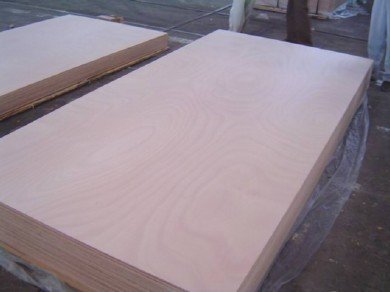
Buyers who search for plywood b&q 9mm usually arrive comparing the middle of the range against the sheet they already use. The 9mm panel weighs less than the 12mm, costs less per sheet, and still holds tight on interior frames. It suits drawer carcasses, light shelving, signs, and jig work. This guide covers where the gauge fits, how it behaves under load, and how to verify the sheet before a volume order.
A 9mm softwood plywood sheet bridges the gap between the flexible 5mm and the heavy 12mm. It carries light interior jobs with enough stiffness to feel solid, yet it stays light enough to hold in one hand.
Drawer carcass sides, sign blanks, light shelving, and small jig boards all take the 9mm gauge. The panel works when the load spreads across a short span or a supporting frame.
The key difference from the 5mm shows in the hand. A 9mm sheet resists the corner twist a thin panel accepts, so parts stay square during the glue-up.
In short, the 9mm panel does everything the 5mm cannot and pays less than the 12mm. That position explains its place in the middle of most retail stacks.
Buyers also reach for 9mm when the part gets handled, not just stored. Drawer boxes and sign frames move on and off the bench, and the 9mm edge survives that movement better than the fragile 5mm. A part that takes a hinge or a cam fitting benefits from the thicker core, because the fitting bites deeper before it hits the void.
That same edge behavior sets the limit. A 9mm core holds a standard screw, yet it thins under repeated loading, so buyers choose a thicker panel where the fitting gets set and reset. The gauge suits a part that stays put, and the heavier panel suits a part that keeps moving.
The balance between strength and weight defines the 9mm sheet. It flexes less than the 5mm under a hand load and lifts far easier than the 18mm on a bench.
Deflection, the sag under load, stays modest at short spans. For a typical shelf width, the 9mm panel keeps its line, and it flexes noticeably only when the span stretches or a heavy item lands.
Boxes, shelves, and panels over short spans stay flat. The frame spacing matters, yet the 9mm sheet tolerates normal spacing.
A heavy object on one corner stresses the panel more than a spread load. Keep concentrated weight away from unsupported edges.
The face and the edge sealing decide stability. A 9mm panel dry-climates well, while an unsealed edge on a damp site cups over weeks.
Consequently, buyers use the 9mm gauge where stiffness, not brute strength, does the work. The sheet supports the frame instead of replacing it.
A simple hand test calibrates the balance. Hold the panel flat in one hand and press the far corner; the 9mm gives a little, while the 5mm folds and the 12mm stays stiff. Buyers use that same feel to set the thickness budget, because the panel that reads solid in the hand builds confidence on the job.
The plywood b&q 9mm price sits close to the 12mm on the shelf, yet the dense packing of the thin gauge cuts the share of freight at container volume.
A container holds many 9mm sheets, so the share of freight per sheet stays smaller than for the heavy gauges. The landed cost for the middle gauge rewards repeat orders.
However, the savings appear only when the spec repeats. A buyer who orders 9mm once and switches gauge the next month loses the volume advantage to handling costs.
In comparison, the middle gauge fills the container efficiently and leaves room for a smaller run of heavier panels in the same load.
The packing question settles the container plan. Buyers load the 9mm panels first, count the remaining cube, then add the heavier gauge to fill it. That mixed load keeps the freight share per sheet low and turns one shipment into two steady supply lines instead of two separate deliveries.
The count changes the schedule, not just the price. Buyers who know how many 9mm sheets fill the space plan the next order around the container, not around the shop shelf. The middle gauge earns its reputation on that repeat, where the price per sheet and the freight share both hold.
Verification starts with the sample sheet and ends with the mill document. Buyers measure the gauge at several corners and compare the numbers to the stated spec.
For interior carcasses and signs, Commercial Plywood supplies the stable core and the flat face at a mill rate. For flat, paint-ready panels, MDF Board offers the smooth surface when appearance matters more than weight.
Buyers then fit the sample into the real frame, load it with the working weight, and leave it for a week. The trial answers whether the 9mm sheet behaves like the sheets from the last order.
The brand context helps here: factories such as HYY press the gauge to a written specification, so the sample and the container match. That consistency turns a one-off purchase into a repeatable sourcing line.
Documentation closes the loop. The buyer records the sample measurements, the batch number, and the loading moisture, then compares them on the next delivery. A supplier that holds the numbers from order to order earns the repeat order, and a supplier that drifts gets the rework.
Sign blanks and fixture parts put the 9mm gauge under a different kind of test. The surface takes the print or the varnish, and the edges carry the fasteners, so the face and the core matter more than a pure load figure.
A sign blank starts with the face. Print adheres best to a clean, sanded surface, and a patch-marked face shows through the first coat. Buyers order the face grade to the finishing step, then cut the blank slightly oversize and trim it after the print settles.
Fixture panels sit, get moved, and take a rough touch. The 9mm edge holds the staple, the screw, and the hinge better than the 5mm, and the panel hands the finishing stage a square part. Buyers who fit the same part hundreds of times measure the saving in rejects.
Light wall panels and trim boards fix flat to a frame, so the 9mm plane carries no weight. The stiffness still matters, because a wavy face shows in the shadow line. Flat storage and a dry site keep the blank proud of its frame.
Consequently, the 9mm gauge solves the jobs that sit between the fragile and the heavy. Buyers who document the face and grade the batch turn the middle gauge into a dependable production line.
The questions below keep coming up in purchasing reviews, and each has a short answer.
Not alone. The panel backs the cabinet, while the wall fixings carry the weight. Match the back to the carcass design.
Clearly. The thicker core resists the corner twist and the sag that the thin gauge accepts, so parts stay square during assembly.
A standard softwood sheet of this gauge weighs roughly 7kg, so one person handles it comfortably through the shop.
Only with a suitable bond class and sealed edges. For rain-facing work, buyers step up to a weather-resistant panel.
Weight and price. When the frame carries the load, the 9mm panel saves both, and the stiffness still reads as solid in the hand.
The 9mm question usually answers itself on a trial run: buyers build the first box, load it, and decide from the feel whether the gauge suits the part. That one trial settles the debate faster than a week of price lists.
The trial also writes the spec for the next order. Buyers record the thickness, the face, and the batch, then hand that sheet to the supplier so the next container repeats the same panel.